SEVENTH GRADE LANGUAGE ARTS: 7th Grade~Miss Jenkins
COURSE DESCRIPTION: Common Core-Language Arts & Honors English
Reading: English Literature
Reading in seventh grade is designed to get students engaged and become active readers when reading any type of text. Whether it is a paperback or a content area textbook, students will learn strategies for maximizing their learning in the reading experience. This will help prepare our students for high school and support our students in their efforts to meet the Arizona National Standards. Writing, speaking, and presenting as ways of responding to reading will also be a major component of class. Seventh grade reading projects, activities and topics will include drama, Literature Circles, genre studies, interdisciplinary projects, poetry, and public speaking. In addition, the seventh grade Language Arts curriculum seeks to develop and foster critical and analytical thinking skills through the study of literature, including such works as Animal Farm, The Outsiders, and Nothing but the Truth, as well as historical fiction and classic short stories for independent reading and “book talks”. These skills will be demonstrated through activities designed to strengthen speaking, listening, and writing abilities, so that students can learn to articulate clearly and creatively their ideas and feelings. In addition to facilitating the learning of traditional language arts skills, the seventh grade curriculum seeks to promote and enhance student achievement and self-worth through innovative means that make academics timely and relevant, and that are sensitive to a variety of cultures and learning styles.The following skills/standards will be applied:
Life Long Readers: help the students become life long readers; and be able to read for content as well as deeper meanings.
Learning to Read Independently: purpose for reading, word recognition, vocabulary development, fluency, comprehension and interpretation
Reading Critically in Content Area: identifying important details, inferences, fact from opinion, comparisons, analysis and evaluation
Reading Analyzing and Interpreting Literature: literary elements, literary devices, poetry, drama
Speaking and Listening: listening skills, speaking skills, discussion and presentation

English Composition
Writing in seventh grade is designed to provide students with the skills necessary to respond to literature, compose letters, develop the use of proper grammar and mechanics when writing, develop the skills necessary to complete research reports, and learn how to work through the writing process. Through daily and long-term assignments, students build and expand their understanding of writing as a process that includes note taking, drafting, revising, editing, and publishing. Instruction in the structure and styling of sentences, paragraphs, and essays is emphasized. Students learn to plan before writing, showing awareness of purpose, audience, content, and form. Oral communication skills are strengthened through the reading and evaluation of students‟ writing; including self, peer, and teacher evaluation.
The following skills/standards will be applied:
Types of Writing: Expository, Personal Narrative, Descriptive, Persuasive, Poetry and informal writing (journals, friendly letters, etc.)
Quality of Writing/Six Traits: Ideas, Organization, Word Choice, Voice, Sentence Fluency, Conventions
Characteristics and Function of the English Language: Word origins, word variations, application of language
Research: Selection of topics and research, location of information, organization of a research paper

 YEAR LONG MULTI-MEDIA READING AND WRITING PROJECT
"GET DOWN AND BOOK IT!"
Overview of Project:
Throughout the school year, students will reflect on their favorite books and share them with classmates through multi-media presentations and posters. After hearing the presentation, students will then consider which books they might like to read in the future. Students who were previously enrolled in Honors classes (Language Arts) will take the lead and become project coordinators and peer models/guides. All students taking part in the project will be creating posters to illustrate their favorite books. Once completed, the posters will become part of a mock-library designed and created by the entire class (book selections cannot be repetitive; it is highly encouraged that students think about choosing from multiple genres).
Student Objectives:
As an active reader, students will:
1. examine and explore their favorite books.
2. create posters about their favorite books, present the information, and share their designs in an in-class mock-library.
3. reflect on books learned about in class and may possibly read in the future.
-
SHORT STORY/NOVEL STUDIES
- 1st Quarter
- "Three Skeleton Key"
- by George Toudouze
- Man of Many Interests: George G. Toudouze was born in France and grew up to develop many literary interests--he was a playwright, an essayist and an illustrator. He also had a great interest in the sea and worked on a history of the French navy. "Three Skeleton Key" was first published in Esquire, a magazine that was once famous for its adventure stories.
Great Storyteller
One critic says of Toudouze's storytelling style, “It has the impact of a powerful man at the fair who, for the fun of it, takes the hammer and at one blow sends the machine to the top, rings the bell, and walks off."

-
BRIEF OVERVIEW
On an island off the coast of South America a fierce battle rages between man and nature. An army is attacking three lighthouse keepers…not an army of men, but…of rats!!
-
Literary Focus: Suspense and Foreshadowing
Do you ever sit on the edge of your chair in a movie theater, worrying what will happen next? Maybe you wonder, “What’s behind the door? Is she going to open the door?” Then you scream out, “Don’t open the door!” This feeling of nervous curiosity is called suspense.
Writers often build suspense by dropping clues about what may happen later in the story. This use of clues is called foreshadowing. For example: First, a character hears a noise. Then, the character looks at a door. Then, the character walks slowly to the door.
Reading Skill: Making Predictions
When you try to guess what will happen next, you are making a prediction. Don’t worry if your prediction isn’t correct. After all, if you could guess everything that happens in a story before it happens, you’d get bored. Clever writers will often surprise you.
Previewing: Into the Story
Are you ready? You’re about to read a very scary story. As you read, look for clues that foreshadow something that will happen. As the suspense builds, try to predict possible outcomes. Stay calm, and watch out for the rats!,

"Rikki-Tikki-Tavi"
by Rudyard Kipling
-
English poet, short-story writer, and novelist : During the Victorian Era, British author Rudyard Kipling (1865-1936) was both respected as a journalist and lauded as "The Poet of the [British] Empire." In his fiction, though, he blended the best of both skills and was ultimately awarded the Nobel Prize for Literature in 1907 "in consideration of the power of observation, originality of imagination, virility of ideas, and remarkable talent for narration which characterizes [his] creations." "Rikki-Tikki-Tavi," a short story from The Jungle Book (1894), is an engaging example of Kipling's ability to mix scientific and historical fact with imaginative characterizations to create a believable and entertaining tale.

BRIEF OVERVIEWA song-like poem serves as prologue to ‘‘Rikki- Tikki-Tavi,’’ prefiguring the battle between the mongoose Rikki-tikki-tavi and Nag, the king cobra. The struggle between the mongoose and snake is the central focus of the story and the poem, which foreshadows the conflict but only hints at its resolution and creates a sense of suspense and expectation before the story even begins.
-
MEDIA ADAPTATIONS
- "Rikki-Tikki-Tavi" was adapted as an animated film in 1975. It was directed by Chuck Jones, narrated by Orson Welles, and is available on VHS from Family Home Entertainment (reissued 2001).
- A downloadable audio recording of stories from The Jungle Books, including "Rikki-Tikki-Tavi," is available at http://www.audible.com and is narrated by Flo Gibson.
-
~Novel Study~
- 2nd Quarter
- (Non-Honors classes)
- The Outsiders by S.E. Hinton
- Three brothers struggle to stay together after their parents' death, as they search for an identity among the conflicting values of their adolescent society in which they find themselves "outsiders."
Themes: action, families, gangs, identity

2nd Quarter (Honors)
Lord of the Flies by William Golding
In Lord of the Flies, British schoolboys are stranded on a tropical island. In an attempt to recreate the culture they left behind, they elect Ralph to lead, with the intellectual Piggy as counselor. But Jack wants to lead, too, and one-by-one, he lures the boys from civility and reason to the savage survivalism of primeval hunters. In Lord of the Flies, William Golding gives us a glimpse of the savagery that underlies even the most civilized human beings.
Theme: The major theme of Lord of the Flies is that humans are essentially barbaric if not downright evil. The stranded boys begin by establishing a society similar to the one they left behind in England, but soon their society has degenerated into rival clans ruled by fear and violence; before the book is over, three boys have been killed.

3rd Quarter (Honors) Animal Farm by George Orwell (pseudonym of Eric Arthur Blair) There are a number of conflicts in Animal Farm—the animals versus Mr. Jones, Snowball versus Napoleon, the common animals versus the pigs, Animal Farm versus the neighboring humans—but all of them are expressions of the underlying tension between the exploited and exploiting classes and between the lofty ideals and harsh realities of socialism.
Themes: The corruption of socialist ideals in the Soviet Union; the societal tendency toward class stratification; the danger of a naïve working class; the abuse of language as instrumental to the abuse of power.

4th Quarter Kaffir Boy by Mark Mathabane
Kaffir Boy is the classic story of life in Apartheid South Africa.
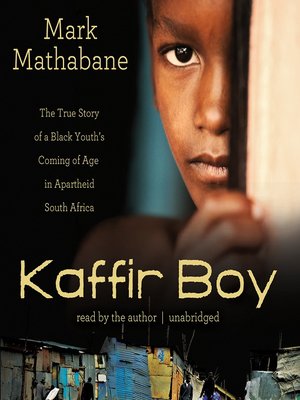
Mark Mathabane was weaned on devastating poverty and schooled in the cruel streets of South Africa's most desperate ghetto, where bloody gang wars and midnight police raids were his rites of passage. Like every other child born in the hopelessness of apartheid, he learned to measure his life in days, not years. Yet Mark Mathabane, armed only with the courage of his family and a hard-won education, raised himself up from the squalor and humiliation to win a scholarship to an American university.
This extraordinary memoir of life under apartheid is a triumph of the human spirit over hatred and unspeakable degradation. For Mark Mathabane did what no physically and psychologically battered "Kaffir" from the rat-infested alleys of Alexandra was supposed to do -he escaped to tell about it-
Themes:
: The Value of Education :
Kaffir Boy’s single most important theme is the value of education. Knowing that spending food money on school fees will likely result in a severe beating, Mark’s mother still enrolls him in school and endures the consequences. Though she never had the opportunity to complete first grade, she is determined to see her son educated. She believes that education is the key that will open up a new world and a new way of life to her children, and she is willing to sacrifice everything to give him that key. She believes that knowledge means power, can give one the weapons necessary to fight injustice, and can liberate her son from the prison of hunger and poverty in which he is trapped. Realizing how much his mother believes in education, Mark becomes a diligent student, rises to the top of his class, wins scholarships, and learns to express himself through writing and speaking.
: Abuse of Power :
Kaffir Boy is the first book to expose the apartheid regime’s bigoted and
unethical abuse of power. When the National Party won the 1948 election based
on their promise to legalize apartheid, the minority white population began
passing laws that restricted living areas, schools, and medical care for the
black or “Bantu” population. Blacks were confined to designated areas –
all-black townships and arid rural “homelands.” They could not move about
without a passport-like booklet containing their photograph, address, marital
information and employment status. Mark and his family, like other black South
Africans, were victims of a racially abusive system that remained in power
until the early 1990s.
: Equal
Opportunity :
The black population’s lack of equal opportunity is vividly described in Kaffir Boy. Jackson Mathabane is continually arrested and imprisoned for such “crimes” as being temporarily unemployed and living with his wife and children. While he is in prison, the family has no money and survives by digging for food in the garbage dumps on the outskirts of Alexandra. They arrive early so they will be the first ones there when the garbage trucks arrive. They live on the refuse of South Africa’s whites. The lack of opportunities open to blacks is further illustrated by Mark’s visits to the white world when he accompanies his grandmother to the Smiths’ residence in the exclusive suburb of Rosebank. The three-member Smith family lives in a house that is ten times the size of the shack in which the nine-member Mathabane family lives. The Smith home has electricity, central heat and air, running water, and spare bedrooms. By contrast, the Mathabane shack is made of crumbling bricks, scavenged wood and sheets of corrugated steel. The two-room shack has no heat, electricity or running water.
: Gender Equality :
The unfair inequality between males and females is another dominant theme in Kaffir Boy. According to tribal customs, a man pays lobola (a bride price) to “purchase” a bride. This custom leads men to treat their wives and daughters more like property than human beings. Because Mark’s father purchased his mother, she is trapped in the marriage and cannot escape his abuse.
: The Struggle to
Survive :
Though she bears a triple yoke of oppression – as a black, as a woman and as an
illiterate – Mark’s mother refuses to be a victim and is determined to survive
and ensure that her children succeed. She stands up to her husband on issues
that matter to her and seeks shelter in her mother’s house only when absolutely
necessary. She uses her love, compassion and wisdom to bring Mark back from the
brink of suicide and to teach him how to survive, how to refuse to give in to a
victimizer, and how to triumph over obstacles.








VOCABULARY STUDY
Key Principles
1. Students will be provided direct instruction for 15-20 minutes a week.
2. Students will be taught words which not only appear on state and national measures of literacy, but also words that have the potential to generate the acquisition and understanding of numerous additional words.
3. Students will be taught in a multi-modal manner, with an emphasis on tactile learning.
4. The technique of "fast mapping" will be used: Students will generate at least six explanations or examples of a vocabulary building principle before teaching another vocabulary building principle.
In the book, Classroom Instruction That Works, Marzano, Pickering, and Pollock (2001) review the research on vocabulary instruction. In Chapter 11, “Teaching Specific Types of Knowledge,” they make five research-based generalizations about vocabulary instruction:
1. Students must encounter words in context more than once to learn them.
2. Instruction in new words enhances learning those words in context.
3. One of the best ways to learn a new word is to associate an image with it.
4. Direct vocabulary instruction works.
5. Direct instruction on words that are critical to new content produces the most powerful learning.
In the same chapter, the authors also present a five-step process for teaching new terms and phrases:
1. Present students with a brief explanation or description of the new term or phrase.
2. Present students with a nonlinguistic representation of the new term or phrase (Kinesthetic learners).
3. Ask students to generate their own explanations or descriptions of the term or phrase.
4. Ask students to create their own nonlinguistic representation of the term or phrase.
5. Periodically ask students to review the accuracy of their explanations and representations.


7th Grade Motto & Class Mascot


"OH, THE PLACES YOU'LL GO!
THERE IS FUN TO BE DONE! THERE ARE
POINTS TO BE SCORED. THERE ARE GAMES TO BE WON."
From: Oh, The Places You'll Go!
Theodor Seuss Geisel, better known to the world as the beloved Dr. Seuss, was born in 1904 on Howard Street in Springfield, Massachusetts. Ted's father, Theodor Robert, and grandfather were brewmasters in the city. His mother, Henrietta Seuss Geisel, often soothed her children to sleep by "chanting" rhymes remembered from her youth. Ted credited his mother with both his ability and desire to create the rhymes for which he became so well known.
At the time of his death on September 24, 1991, Ted had written and illustrated 44 children's books, including such all-time favorites as Green Eggs and Ham, Oh, the Places You'll Go, Fox in Socks, and How the Grinch Stole Christmas. His books had been translated into more than 15 languages. Over 200 million copies had found their way into homes and hearts around the world.
Besides the books, his works have provided the source for eleven children's television specials, a Broadway musical and a feature-length motion picture. Other major motion pictures are on the way.
His honors included two Academy awards, two Emmy awards, a Peabody award and the Pulitzer Prize.

|
READ ACROSS AMERICA |
|
"You're never too old, too wacky, too wild, to pick up a book and read to a child." What better way to celebrate Dr. Seuss's birthday than reading to a child? On the evening of March 2nd (Dr. Seuss's birthday), Random House and the National Education Association (NEA) urge you to participate in the second annual Read Across America and read to a child. WHY CELEBRATE DR. SEUSS? Dr. Seuss epitomizes a love of children and learning. Also, his use of rhyme makes his books an effective tool for teaching young children the basic skills they need to be successful. When we celebrate Dr. Seuss and reading, we send a clear message to America's children that reading is fun and important!
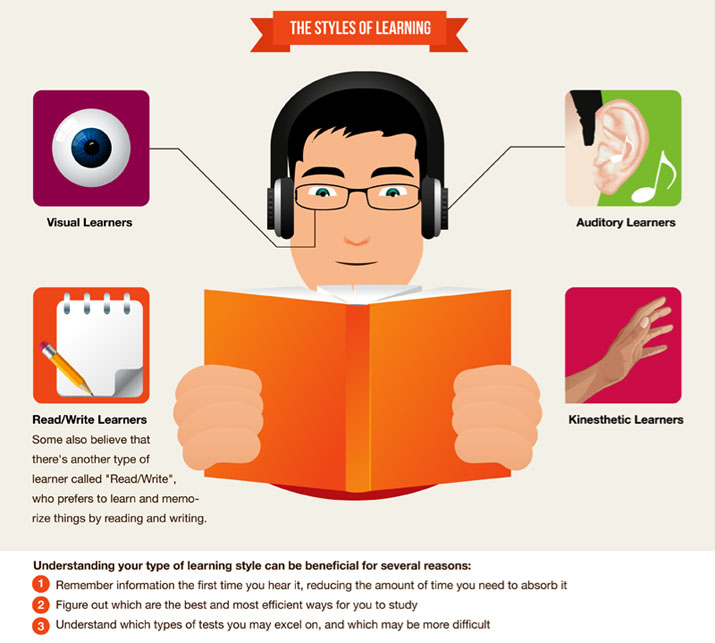
LEARNING STYLES All children have unique learning styles. Students gain strong benefits when their teachers and Learning Coaches recognize their strengths and weaknesses as learners. Howard Gardner, a psychologist and professor of neuroscience at Harvard, developed one theory in 1983. Gardner defines “intelligence” not as an IQ but, rather, as the skills that enable anyone to gain new knowledge and solve problems. Gardner proposed that there are several different types of intelligences, or learning styles.
Combinations of the different types of intelligence abound. A hiker fascinated by birdsongs might have strong auditory-musical and naturalistic intelligences, supplemented by bodily-kinesthetic intelligence. The neighbor skilled in solving puzzles and discerning patterns may combine logical-mathematical intelligence with visual-spatial intelligence. All of these learning styles indicate different ways of interacting with the world. Everyone has some degree of each, but each person favors certain learning styles. This is significant because when your child prefers one learning style over another, it affects his or her success. Imagine that your child is tackling a written essay or report. Have him or her consider different methods by taking advantage of his or her strongest learning style: Logical-Mathematical – Use a graphic organizer such as a web or story map to categorize and organize thoughts before writing. An outline is a written version of a graphic organizer. Visual-Spatial – Draw or design the subject of the piece, and then write or create the written draft. Details in the drawing will lead to details in the writing. Auditory-Musical – Listen to background music to block out other, distracting sounds. Hum. Chant. I have a sneaking suspicion that Dr. Seuss, with his talent for rhythm and meter and rhyme, was an auditory learner. Finding, recognizing, and valuing different combinations of multiple intelligences is a key to applying these skills effectively. Sometimes an intrapersonal learner and an interpersonal learner working together will be in conflict. But when both step back and consider their differing outlooks, they may find that they’re both headed for the same result; they’re just taking different paths to arrive at the goal. After graduation, professionals such as these two learners might team up to create or advance a new, successful idea!
DEAR PARENTS One of the most important things your child can do to achieve academic success is also one of the most basic: going to school every day. In fact, research has shown that your child's attendance record may be the biggest factor influencing her academic success.
There are other benefits as well: Achievement:students who attend school regularly are more likely to pass reading and math assessments than students who don't attend school regularly. Opportunity: For older students, being in school every day gives them a chance to learn more about college and scholarship opportunities, and to take the important exams they need to build a successful academic record. Exposure to the English language: Regular school attendance can also help students who are learning English by giving them the chance to master the skills and information they need more quickly and accurately even in other subjects! Being part of the school community: Just by being present at school, your child is learning how to be a good citizen by participating in the school community, learning valuable social skills, and developing a broader world view. The importance of education: Your commitment to school attendance will also send a message to your child that education is a priority for your family, going to school every day is a critical part of educational success, and that it's important to take your responsibilities seriously including going to school. What you can do  As a parent or guardian, it is possible to plan ahead in order to limit your child's absences, make school attendance a priority, and help your child from falling behind if it is necessary to miss a day of school.You can do this in the following ways: Help your child get to school on time every day.Babysitting, problems with a car or late bus, and the weather are not permissible reasons to miss school. Frequently coming to school late may also be noted on your child's permanent record, and will make it difficult for your child to stay caught up with the first lessons of each morning. Teach your child how to set and use an alarm clock, and keep the television turned off in the morning. Follow the school's guidelines and attendance policy, and report excused absences immediately. At the beginning of the school year, review the school's rules and make sure you understand whom you need to call if your child is going to be absent. Check homework. Check each night to see that your child understands and completes the day's homework assignments. Take an active role. Stay involved with your child's daily experiences at school by asking how the school day went, and then listening carefully to what your child shares with you both the successes and struggles. Make it a point to meet your child's teacher and friends. Locate potential sources of anxiety.If your child frequently appears upset or reluctant to go to school and cannot tell you why, schedule an appointment with his or her teacher or school counselor to talk about possible sources of the anxiety. Keep updated on school events and announcements. Read the school documents that your child brings home and take note of important announcements and dates, such as back-to-school night and parent-teacher conferences. Try to limit the amount of time that your child misses school due to medical appointments or illness. If possible, avoid scheduling doctor's appointments during the school day.Allow your child to stay home only in the case of contagious or severe illnesses. Students who miss days, weeks, or months of school ata time will have a difficult time passing their courses and catching up to their peers. For older students, prolonged absences may make it very difficult to graduate from high school. Schedule family events with your child's school schedule in mind.Plan holiday celebrations or family trips during weekends or school vacations. In the case of family emergencies or unexpected trips, talk to your child's teacher as far in advance as possible and set up a way that your child can work ahead or bring important homework on the trip. Plan ahead. Encourage your child to prepare for the next school day by laying out clothes the night before and helping to fix lunches. Promote good health.Make sure that your child eats a balanced diet with plenty of fruits and vegetables, and has opportunities to exercise every day through a sports team or playtime outside. Create a restful environment. Finally,make sure that your child can relax before bedtime by doing something quiet like reading rather than do something stimulating, like watching television. Ensure that your child gets enough quality sleep ideal amounts range from 8 to 12 hours. Getting enough sleep will help her get up on time, be refreshed in the morning, and feel ready for a full day of learning ahead!
|





CURRENT READING &
WRITING ACTIVITIES/UPCOMING EVENTS
As of April 6, 2016
"Helping Kids Succeed- Panther Style"
Internal Assets of the Week:
Our new assets are Accountability and Responsibility
Throughout the year we will be working with you to build what we call the “Developmental Assets”. Our new assets for consideration during the next two weeks are accountability and responsibility. Do you feel that you have control over “things that happen to you”? Do you take responsibility for the results of your actions?
Quote of the Week:
"The purpose of learning is growth, and our minds, unlike our bodies, can continue growing as long as we live.”-Mortimer Adler
Overview: Week at a Glance April 4, 2016
-Novel Study: Animal Farm-
Monday through Friday
Monday
Az Merit Writing Test: Block Schedule-120 Minutes
Tuesday
Periods 4, 5, 5, 7 only
Wednesday
Early Release: Get Down and Book it Presentations
Thursday
Animal Farm Novel Study Chapter 1

Fridays
"Get Down and Book it" Student Novel Presentations
-Quarter Four-
*Review Each Night*
Non-Fiction Study Companion
Reading and Writing
What is Non-Fiction and Why Do We Study It?
Characteristics of Nonfiction
There are several important traits of all nonfiction works. Most importantly, nonfiction writing must involve real people, places, and events. The stories told in nonfiction works must be true. If something in the story is made-up, then it falls under fiction. Nonfiction must also contain facts, which are information that can be proved to be true. With this in mind, a writer can select and organize the facts in a number of ways in order to accomplish his purpose. Some facts can be omitted, and others can be shown in a specific light, but overall, facts must be present in the written work.
Most nonfiction works also have a similar author's purpose, which is the reason the author writes. Most nonfiction is written to express or to inform. If the author's purpose is to express, the concepts expressed are always based on true, real-life situations. Because of this, one could argue all nonfiction serves to inform the reader, as well.
Types of Nonfiction
Now, let's look at the two types of nonfiction. The first is literary nonfiction, which includes nonfiction writing that reads like fiction. This means that literary nonfiction includes the elements of fiction, like characters, setting, and plot; however, in nonfiction these elements must be real and not imaginary. The stories are meant to amuse the reader, as well as inform on true stories. Literary nonfiction includes biographies, autobiographies, and essays.
The other type of nonfiction is informative nonfiction. The purpose of informative nonfiction is to explain or inform about a concept or situation. This type of nonfiction exists to provide the reader with factual information. Informative nonfiction includes articles and interviews.
Examples of Nonfiction
There are many types of nonfiction examples in the world of literature. Remember, literary nonfiction includes works written like stories, but based on true events and people. All autobiographies and biographies fall into this category. Here are some well-known autobiographies and biographies:
- I Know Why the Caged Bird Sings by Maya Angelou
- The Story of My Life by Helen Keller
- Einstein: His Life and Universe by Walter Isaacson
- Cleopatra: A Life by Stacy Schiff
- Catherine the Great: Portrait of a Woman by Robert K. Massie
What Is Literature and Why Do We Study It?
Literature is
– Composition that tells a story, dramatizes a situation, expresses emotions, analyzes and advocates ideas
– Helps us grow personally and intellectually
– Provides an objective base for knowledge and understanding
– Shapes our goals and values by clarifying our own identities, both positively and negatively
– Literature makes us human.
Genres
• Four genres of literature:
– Prose fiction
• Myths, parables, romances, novels, short stories
- Poetry
• Open form and closed form
• Relies on imagery, figurative language, sound
- Drama
• Made up of dialogue and set direction
• Designed to be performed
- Nonfiction prose
• News reports, feature articles, essays, editorials, textbooks, historical and biographical works
Guidelines for Reading Literature
• First reading
– Determine what is happening, where, what, who is involved, major characters
– Make a record of your reactions and responses
– Describe characterizations, events, techniques and ideas
• Second reading
– Trace developing patterns
– Write expanded notes about characters, situations, actions
– Write paragraph describing your reactions and thoughts
– Write down questions that arise as you read (in the margins)
Plot and Structure
• Plot = reflection of motivation and causation
– No plot = The king died and then the queen died.
– Plot = The king died, and then the queen died of grief
• Conflict = controlling impulse in a connected pattern of causes and effects
– Opposition of two or more people (e.g., hatred, envy, anger, argument, avoidance, gossip, lies, fighting, etc.)
• Dilemma = Conflict within or for one person
– Conflict is a major element of plot because it arouses curiosity, causes doubt, creates tension, produces interest
– No conflict = no plot

Characters in Fiction
• Character = verbal representation of a human being
– Rounded = lifelike, full, dynamic, reader can predict future
behavior because of an understanding of the personality
–Protagonist = the hero or heroine, main person in the story,
person on the quest, etc.
– Antagonist = the person causing the conflict, in opposition to
the protagonist, the obstacle, etc.
– Flat = no growth, static
– Stock = representative of a group or class (stereotypical)
– Characters disclosed through
• Actions
• Descriptions, both personal and environmental
• Dramatic statements and thoughts
• Statements by other characters
• Statements by the author speaking as storyteller, or observer
– Characters need to have verisimilitude, be probable or
plausible
Setting
• Setting = a work’s natural, manufactured, political, cultural and temporal environment,
including everything that characters know and own (place, time, objects)
• Major purpose = to establish realism or verisimilitude, and to organize a story
• Setting helps create atmosphere or mood
• Setting may reinforce characters and theme, in order to establish expectations that are the opposite of what occurs = irony
Tone and Style
• Tone = methods by which writers and speakers reveal attitudes or feelings
• Style = ways in which writers assemble words to tell the story, to develop an argument, dramatize the play, compose the poem
– Choice of words in the service of content
• Essential aspect of style is diction
– Formal = standard or elegant words
– Neutral = everyday standard vocabulary
– Informal = colloquial, substandard language, slang
• Language may be:
– Specific = images
– General = broad classes
– Concrete = qualities of immediate perception
– Abstract = broader, less palpable qualities
• Denotation = word meanings
• Connotation = word suggestions
• Verbal irony = contradictory statements
– One thing said, opposite is meant
– Irony = satire, parody, sarcasm, double entendre
• Understatement = does not fully describe the importance of
a situation – deliberately
• Hyperbole (overstatement) = words far in excess of the situation
Symbolism and Allegory
• Symbolism and allegory are modes that expand meaning
• Symbol creates a direct, meaningful equation between:
– A specific object, scene, character, or action
– Ideas, values, persons or ways of life
• Symbols may be:
– Cultural (universal) = known by most literate people
(e.g., white dove, color black)
– Contextual (authorial) = private, created by the author
• Allegory is a symbol = complete and self-sufficient.
an Allegory is a story, poem, or picture that can be interpreted to reveal a hidden meaning, typically a moral or political one.
"Pilgrim's Progress is an allegory of the spiritual journey"
• Fable = stories about animals that possess human traits
(e.g., Aesop’s Fables)
• Parable = allegory with moral or religious bent (e.g.
Biblical stories)
• Myth = story that embodies and codifies religious,
philosophical and cultural values of the civilization in which
it is composed (e.g., George Washington chopping down
the cherry tree)
• Allusion = the use of other culturally well=known works
from the Bible, Greek and Roman mythology, famous art etc.
Main Idea or Theme
• Idea = results of general and abstract thinking
– In literature, theme relates to meaning, interpretation,
explanation and significance
• Literature embodies values along with ideas
– Theme is vital to an understanding and appreciation of literature
• A story's themes may not be as obvious as character or setting. It is important to consider the meaning of what you’ve read and
then develop an explanatory and comprehensive assertion.
• Theme can be found in any of these:
– Direct statements by the authorial voice
– Direct statements by a first-person speaker
– Dramatic statements by characters
– Figurative language, characters who stand for ideas
– The work itself

Arizona's AzMERIT Writing Benchmark
Writing to Texts: 7th Grade
The balance of student writing at this level is 70 percent analytical (35 percent argument and 35 percent to explain/inform) and 30 percent narrative, with a mix of on-demand and review-and-revision writing assignments.

Routine writing: Routine writing, such as short constructed-responses to text-dependent questions, builds content knowledge and provides opportunities for reflection on a specific aspect of a text or texts. Routine written responses to such text-dependent questions allow students to build sophisticated understandings of vocabulary, text structure, and content and to develop needed proficiencies in analysis.


"Three Skeleton Key"
A Short Story by Toudouze
"My Most Horrifying Experience..."
"Three Skeleton Key" is a short story by the French author George G. Toudouze. The January 1937 edition of Esquire marked its first appearance in English. The plot involves three men tending a lighthouse on an island off the coast of French Guiana. An abandoned ship, overrun by thousands of ferocious rats, makes landfall. A life-and-death struggle ensues as the men attempt to save themselves from the hungry horde.
James Poe adapted the story for radio in a version that aired on Escape in 1949 and returned to the program by popular demand in 1950 and 1953. Each episode featured a different cast. Vincent Price is the actor most associated with the play, performing it in 1950 for Escape and in 1956 and 1958 for Suspense. The One Act Audio Theatre revisited "Three Skeleton Key" in 2001. A modern recording of the piece can be found at the organization's web site as well as the script by James Poe.

A FEW NOTES ABOUT THE AUTHOR
George G. Toudouze (1877-1972) was born in Paris, France. His father, Gustave Toudouze, was a well-known author of the time. The younger Toudouze wrote on such topics as art, architecture, travel and French naval history. Although he penned numerous adventure novels and short stories, he is today most remembered for his single work: "Three Skeleton Key".

LITERARY FOCUS:
SUSPENSE AND FORESHADOWING
A “page turner” is an exciting book; you’re so eager to find out what happens that you read page after page, finding it hard to put the book down. One key ingredient in page turners is suspense—the feeling of uncertainty that propels you to keep reading. To create suspense, writers may create an eerie setting or withhold information from readers to keep you guessing. To build suspense, writers sometimes plant clues in their stories. These clues hint at what might happen later. The use of such clues or hints is called foreshadowing.
READING SKILLS:
MAKING PREDICTIONS

Which of the following types of predictions have you made recently: the outcome of a baseball game? Which of your classmates will become class president? What inventions will come about over the next few years? Making predictions is part of participating in life. Likewise, you participate more fully in a story when you make predictions about it.
To make predictions when you read:
• Pay attention to what the narrator tells you about story characters and their situations.
• Make predictions, or guesses, about what will happen.
• Read on to find out if your predictions were on target.

PREVIEW SELECTION:
VOCABULARY DEVELOPMENT
The following words appear in “Three Skeleton Key.” Take time to preview these words before you begin the story.
hordes (hordz) n.: large, moving crowds.
The rats swam ashore in hordes.
receding (ri・s≤d√i≪) v. used as adj.: moving back.
At first the ship came toward us, but then it drifted off in the receding waters.
fathom (faƒ√\m) v.: understand.
The lighthouse keepers couldn’t fathom the rats’ nasty reaction.
edible (ed√\・b\l) adj.: fit to be eaten.
The rats thought the men were edible.
derisive (di・r¢√siv) adj.: scornful and ridiculing.
The rats peered with derisive eyes at the terrified men.

Reading Think-Alouds
Studies have shown that the think-aloud strategy improves reading comprehension on tests. Through this lesson, the teacher will model the think-aloud strategy for students. Components of think-alouds will be introduced, as well as type of text interactions. Students will develop the ability to use think-alouds to aid in reading comprehension tasks throughout the school year.
FROM THEORY TO PRACTICE
Baumann, J.F., Jones, L.A., & Seifert-Kessell, N. (1993). Using think alouds to enhance children's comprehension monitoring abilities.
- The intent behind the think-aloud lessons was to help students develop the ability to monitor their reading comprehension and employ strategies to guide or facilitate understanding.
- Think-alouds require a reader to stop periodically, reflect on how a text is being processed and understood, and relate orally what reading strategies are being employed.
- The think-aloud is a technique in which students verbalize their thoughts as they read and thus bring into the open the strategies they are using to understand a text.
- This metacognitive awareness (being able to think about one's own thinking) is a crucial component of learning, because it enables learners to assess their level of comprehension and adjust their strategies for greater success.
- Several studies have shown that students who verbalize their reading strategies and thoughts while reading score significantly higher on comprehension tests.
BASIC READING STRATEGIES
What Do Good Readers Do?
What Can You Do to Become a Better Reader?
Before Reading
Set a Purpose for Reading
Think if you will you be reading to find out what happens in a story or to learn specific information.
Preview the Text
Look at the title, pictures, captions under pictures, headings, bold-faced print and other graphics.
Activate Background Knowledge
Think about what you already know about the content of what you will read.
Predict
Think what might happen in the story, what words may be used, or what information the text might contain.
During Reading
Cross-check
Check one cue with another. Ask yourself, "Does this word look right, sound right, and make sense?"
Reread
When problems occur, return to the beginning of a sentence or paragraph and read it again.
Predict and Confirm
Ask yourself, "What word do I expect to see?", "What do I think will happen next?", "Did that make sense?", or "Am I finding the answers to my questions about this topic?"
Skip, Read On, and Go Back
Sometimes you can skip an unfamiliar word and read to the end of the sentence or paragraph, thinking about what would make sense. Then, using the context, go back and reread to try to determine the word.
Connect Background Knowledge to the Information in the Text
Think about what you already know about the subject and the kind of material you are reading. Think about how the information is similar to what you already know about the topic, event, or person. If you have many questions about the topic or the kind of book, you may need to ask someone for help.
Think About Explicit and Implicit Information
Think about what information is given directly. Also think about what you know from reading that is not directly stated in words such as how a character's actions show feelings or why things may have happened based on the clues the author gave.
Stop and Review
If you are reading a longer text, stop and think about what has happened in the story so far or what information has been given.
After Reading
Retell and Summarize
Tell someone or write what happened in the story, including characters, plot, and important events. If
you read a nonfiction piece, review what information was presented.
Use a Graphic Organizer
Use a story map, biography wheel, Venn diagram, or other way to show what was included in what you read. (You may need to check with your teacher for suggestions.)
Draw Conclusions
Think about what predictions you made before and during reading. Look back and think about what you have read. Consider how the information read relates to what you already knew about the topic. Were your questions answered? Do you have more questions about the subject?
Reread
Reread the text or a section of the text to help you understand it better.
Discuss and Respond
Talk with someone about what you have read. Ask each other questions. Look back at the book to defend your opinions.
Write to Support Understanding
Write about what you have read, telling what it made you think of or what you learned.
CRITICAL READING STRATEGIES

Previewing: Learning about a text before really reading it.
Previewing enables readers to get a sense of what the text is about and how it is organized before reading it closely. This simple strategy includes seeing what you can learn from the headnotes or other introductory material, skimming to get an overview of the content and organization, and identifying the rhetorical situation.
Contextualizing: Placing a text in its historical, biographical, and cultural contexts.
When you read a text, you read it through the lens of your own experience. Your understanding of the words on the page and their significance is informed by what you have come to know and value from living in a particular time and place. But the texts you read were all written in the past, sometimes in a radically different time and place. To read critically, you need to contextualize, to recognize the differences between your contemporary values and attitudes and those represented in the text.
Questioning to understand and remember: Asking questions about the content.
As students, you are accustomed (I hope) to teachers asking you questions about your reading. These questions are designed to help you understand a reading and respond to it more fully, and often this technique works. When you need to understand and use new information though it is most beneficial if you write the questions, as you read the text for the first time. With this strategy, you can write questions any time, but in difficult academic readings, you will understand the material better and remember it longer if you write a question for every paragraph or brief section. Each question should focus on a main idea, not on illustrations or details, and each should be expressed in your own words, not just copied from parts of the paragraph.
Reflecting on challenges to your beliefs and values: Examining your personal responses.
The reading that you do for this class might challenge your attitudes, your unconsciously held beliefs, or your positions on current issues. As you read a text for the first time, mark an X in the margin at each point where you fell a personal challenge to your attitudes, beliefs, or status. Make a brief note in the margin about what you feel or about what in the text created the challenge. Now look again at the places you marked in the text where you felt personally challenged. What patterns do you see?
Outlining and summarizing: Identifying the main ideas and restating them in your own word.
Outlining and summarizing are especially helpful strategies for understanding the content and structure of a reading selection. Whereas outlining revels the basic structure of the text, summarizing synopsizes a selection's main argument in brief. Outlining may be part of the annotating process, or it may be done separately (as it is in this class). The key to both outlining and summarizing is being able to distinguish between the main ideas and the supporting ideas and examples. The main ideas form the backbone, the strand that hold the various parts and pieces of the text together. Outlining the main ideas helps you to discover this structure. When you make an outline, don't use the text's exact words. Summarizing begins with outlining, but instead of merely listing the main ideas, a summary recomposes them to form a new text. Whereas outlining depends on a close analysis of each paragraph, summarizing also requires creative synthesis. Putting ideas together again -- in your own words and in a condensed form shows how reading critically can lead to deeper understanding of any text.
Evaluating an argument: Testing the logic of a text as well as its credibility and emotional impact.
All writers make assertions that want you to accept as true. As a critical reader, you should not accept anything on face value but to recognize every assertion as an argument that must be carefully evaluated. An argument has two essential parts: a claim and support. The claim asserts a conclusion --an idea, an opinion, a judgment, or a point of view -- that the writer wants you to accept. The support includes reasons (shared beliefs, assumptions, and values) and evidence (facts, examples, statistics, and authorities) that give readers the basis for accepting the conclusion. When you assess an argument, you are concerned with the process of reasoning as well as its truthfulness (these are not the same thing). At the most basic level, in order for an argument to be acceptable, the support must be appropriate to the claim and the statements must be consistent with one another.
Comparing and contrasting related readings: Exploring likenesses and differences between texts to understand them better.
Many of the authors we read are concerned with the same issues or questions, but approach how to discuss them in different ways. Fitting a text into an ongoing dialectic helps increase understanding of why an author approached a particular issue or question in the way he or she did.COMMON CORE/NCTE/IRA NATIONAL STANDARDS FOR LANGUAGE ARTS
1. Students read a wide range of print and nonprint texts to build an understanding of texts, of themselves, and of the cultures of the United States and the world; to acquire new information; to respond to the needs and demands of society and the workplace; and for personal fulfillment. Among these texts are fiction and nonfiction, classic and contemporary works.
2. Students apply a wide range of strategies to comprehend, interpret, evaluate, and appreciate texts. They draw on their prior experience, their interactions with other readers and writers, their knowledge of word meaning and of other texts, their word identification strategies, and their understanding of textual features (e.g., sound–letter correspondence, sentence structure, context, graphics).
3. Students participate as knowledgeable, reflective, creative, and critical members of a variety of literacy communities.

